




If you’re in the market for a pre-owned SUV, few brands can match Chevy’s sheer selection. From the ultra-affordable Trax and the rugged midsize Trailblazer to the sporty Blazer and family-friendly options like the full-size Tahoe and Suburban, the bowtie brand has earned a strong reputation in the SUV segment. While newer models allow drivers to enjoy the latest in automotive technology with cutting-edge features like the Super Cruise hands-free driving system, advanced trailering support, and even a conversational AI feature powered by Google Gemini, there’s also something to be said for seeking out a used Chevy for sale in Hopkinsville.
Chevy’s pre-owned SUVs let drivers enjoy some of the country’s most popular models at steep discounts, whether they’re in the market for a sporty midsize option like the Blazer, the cargo-hauling MVP that is the Traverse, or one of America’s bestselling EVs, the all-electric Equinox EV. In an ongoing effort to connect our customers with the perfect vehicle for their unique driving needs—and budget—we’ve compiled a quick list of three of Chevy’s most enticing pre-owned models and what years to look out for. Let’s explore the selection and see how easily a pre-owned Chevy can upgrade your automotive arsenal.
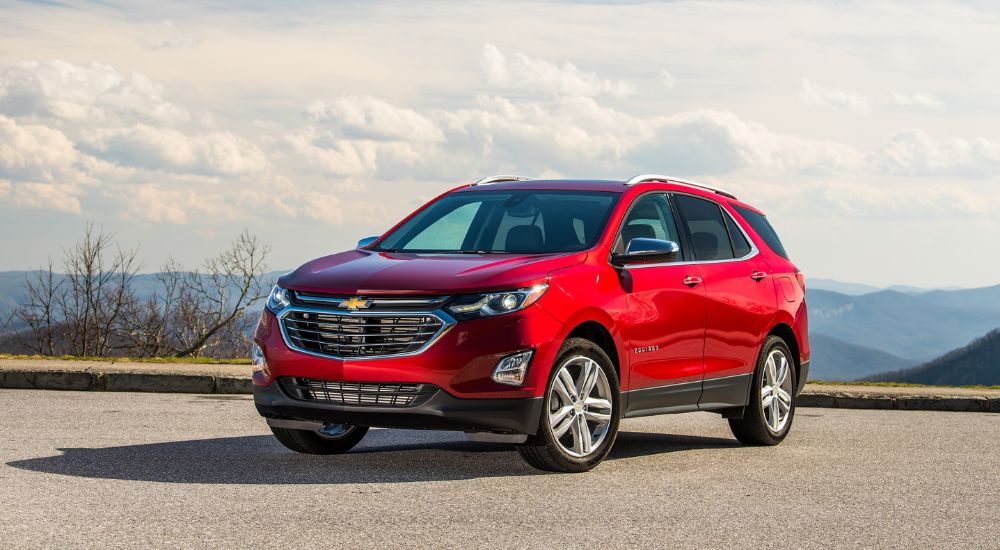
Best Value: The Chevy Equinox (Third Generation 2018-2024)
As a compact model, the Equinox encompasses everything there is to love about the crossover segment. The SUV’s small size gives it car-like efficiency and maneuverability, but the Equinox also boasts the ground clearance, storage space, and utility of a much larger model. It’s a compelling combination by any measure, and one that’s seen the Equinox steadily become Chevy’s best-selling SUV over the last decade.
Award-Winning Safety
Perfect for small families and first-time drivers, the Equinox is known for its reliability and safety-first approach. The SUV has consistently earned some of the best dependability ratings in its class, with the 2021 model marking a high point as it earned a stellar 92/100 from J.D. Power. The compact is also equipped with a full range of advanced driver-assistance features that, when combined with Chevy’s commitment to quality construction, have enabled almost every third-gen model to earn a five-star safety rating from the National Highway Traffic Safety Administration (NHTSA).
A Wide Range of Options to Explore
The compact’s success has inspired Chevy to introduce a new all-electric model in 2024, and while the Equinox EV might be a little tougher to find on the pre-owned market, they’re certainly worth the effort with their low starting price, class-leading range, and fast-charging capability.
As the fourth-gen model hit the market in 2025, the third-generation Equinox represents the sweet spot for those seeking a value-packed crossover. The original 2018 model introduced an entirely new AWD system to the mix, as well as a built-in start/stop feature designed to maximize efficiency, and a full suite of infotainment tech, including Apple CarPlay and Android Auto.
Engine Options to Consider
Chevy even offered a diesel powertrain between 2018 and 2019, and while the 1.6-liter turbocharged engine was a model of efficiency with fuel economy stats that trended as high as 43 MPG on the highway, most third-gen models are powered by a turbocharged gas engine.
The automaker initially graced the third-gen SUV with an optional 252-hp 2.0-liter turbocharged engine that upped the Equinox’s utilitarian appeal with the ability to tow 3,500 lbs, but it was only available through the end of the 2020 model year. The more prevalent 1.5-liter engine isn’t about to set any land-speed records with its 170 hp, but its modest size does allow it to achieve up to 31 MPG on the highway. Chevy tweaked the engine for 2023 to add five hp to the equation, but the 2.0-liter gas engine or the 300-hp AWD version of the Equinox EV are the obvious choices for those seeking a more thrill-packed ride through Hopkinsville.
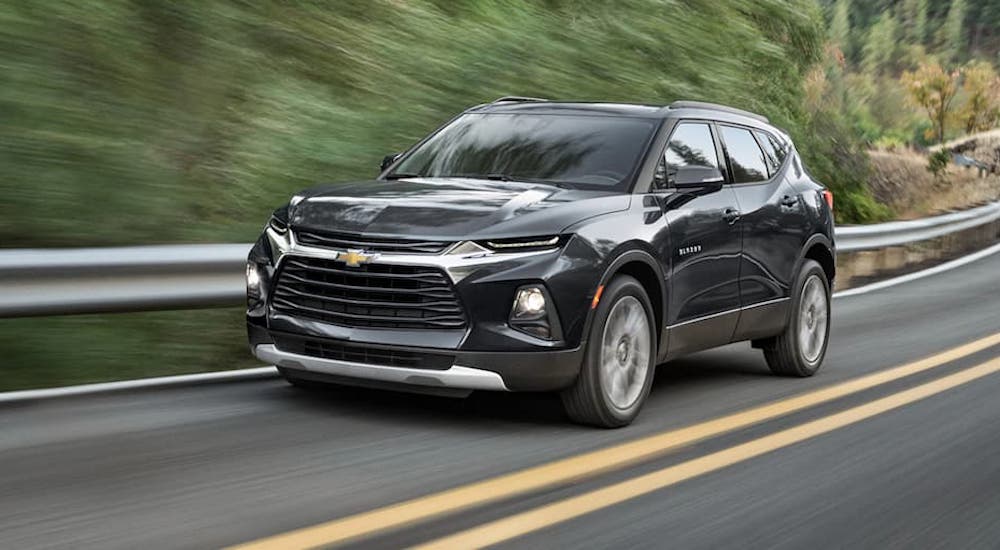
Best Performance: The Chevy Blazer (First Generation 2019- Present)
It’s style and speed that really set the Chevy Blazer apart in the competitive crossover segment. The midsize SUV is inspired by the iconic Chevy S-10 Blazer, but unlike its namesake, it prioritizes performance above off-road ability. The Blazer was initially introduced with two engines that quickly established the SUV as a force to be reckoned with in the midsize segment.
The First Generation Began With Two Unique Engine Options
The 2.5-liter base offering punched well above its modest four-cylinder design to deliver 193 hp, but the optional V6 is the obvious choice if you’re looking to inject a little excitement into your daily commute or weekend drive. While many brands have moved away from larger, naturally aspirated engines, the Blazer’s 3.6-liter V6 might have some of Chevy’s competitors doubting their decision with 305 hp on tap.
The brawny V6 comes standard on the performance-inspired RS trim, which can sprint from zero to 60 mph in just 6.3 seconds as you cruise through Hopkinsville on I-169. That’s significantly quicker than the 8.5-second time posted by the base engine, but that’s just one aspect of the RS’s considerable appeal. The trim is also equipped with some sporty styling upgrades, including unique 20-inch black-painted wheels, an exclusive grille, and black exterior trim.
An Additional Engine Is Added to the Lineup
Chevy added a new engine to the mix soon after the Blazer’s debut, with the SUV gaining a turbocharged, 2.0-liter design that splits the difference between the other two options. Introduced in 2020, the new engine upped the ante in terms of output with 230 hp and 258 lb.-ft. of torque, yet was also the most efficient engine with an EPA-estimated 21 MPG in the city and 28 MPG on the highway for a combined rating of 24 MPG.
It’s an impressively well-balanced option, which is why it was unsurprising when it replaced the 2.5-liter I-4 as the Blazer’s base engine starting in 2022. Like the V6, the new turbo-four can be paired with an AWD powertrain, though only the six-cylinder engine can achieve the SUV’s maximum 4,500-lb towing capacity.
The Blazer is one of the newest additions to the lineup, which means there hasn’t been quite as much time to make improvements when compared to some of Chevy’s longer-running models. That’s not to say the brand hasn’t been busy.
The 2023 Model Received a Makeover
A 2023 facelift saw the Blazer treated to a little makeover, with updated lights, wheels, and a reimagined grille. The eight-inch touchscreen infotainment display was swapped for a larger 10.2-inch version, and a wireless charging pad entered the fray as a standard feature. Like the Equinox, the Blazer gained an all-electric counterpart in recent years, but it could be similarly tough to locate on the used market given its newcomer status.
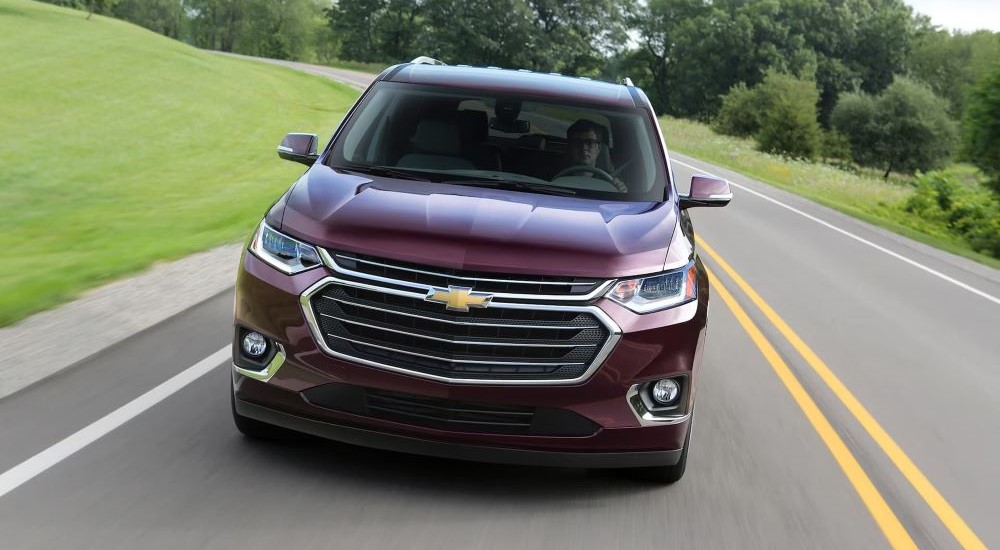
Best Cargo Capacity: The Chevy Traverse (Second Generation 2018-2023)
With three rows and comfortable seating for up to eight passengers, it’s little surprise that the Chevy Traverse has become the go-to choice for today’s busy families. That said, it’s the full-size SUV’s class-leading cargo capacity that makes the Traverse so difficult to ignore when you’re searching for a used Chevy for sale.
A Spacious and Versatile Cabin
The Traverse can easily accommodate up to 23 cu.ft. of cargo with all eight seats in use, but folding down the third row increases that to 57.8 cu.ft. Need to haul larger, bulkier items like luggage, sports equipment, and even appliances? With both the second and third rows folded down, the Traverse can deliver as much as 98.2 cu.ft. of maximum cargo room. That allows the three-row crossover to easily top the rest of the segment, leaving rivals like the Kia Telluride, Ford Explorer and Toyota Grand Highlander in the dust.
Some of the Changes Made Throughout the Second Generation
The second-generation Traverse represented an important evolution of the beloved Chevy SUV. While previous generations had embraced a more curvaceous look, Chevy went the opposite direction with the new model, adopting a pickup-inspired design that honors Chevy’s roots as one of the industry’s foremost pickup brands.
While still firmly in the midsize segment, the Traverse did enjoy a bit of a growth spurt, with the 2018 version adding two inches to its wheelbase. The Traverse was already one of the most capable cargo-hauling options in the midsize segment, but the new, larger platform allowed Chevy to double down on the SUV’s greatest strength.
The second-gen Traverse was powered by the same 3.6-liter V6 for much of its six-year run, though a turbocharged 2.0-liter engine was available on the FWD version of the RS trim between 2017 and 2019. While the optional turbo could provide a little extra low-end muscle with 295 lb-ft of torque, compared to the V6’s 266 lb-ft, it actually produced a little less power at 257 hp.
Luckily, it’s style, not power, that typically draws Hopkinsville buyers to the RS option, which sets itself apart from the rest of the Traverse lineup with a blacked-out grille, black Chevy bowtie badge, and 20-inch wheels. The engine wasn’t the most economical at around 22 MPG combined, but it was a standout in terms of towing with a maximum pulling capacity of 5,000 lbs. While it might not lead the midsize segment, the Traverse’s unique combination of towing power and best-in-class cargo capacity makes the SUV a hard choice to ignore if you’re looking for a used family vehicle that’s not afraid to put in a little hard work.
Equipped With Comprehensive Safety Features
The Traverse’s domestic appeal is underscored by its optional rear-seat infotainment system and a full arsenal of safety features, including automatic emergency braking and lane-keeping assistance, forward collision alerts, adaptive cruise control, and Chevy’s IntelliBeam automatic high-beam headlights.
Discover a Great Pre-Owned Chevy SUV Today
There are many advantages to perusing the pre-owned market. While affordability is the biggest selling point, it’s just one of the reasons Hopkinsville drivers have come to appreciate our wide selection of used models. Everyone’s heard that old maxim about a new vehicle losing 10% of its value as soon as it’s driven off the lot, but the reality is actually a little worse. Research shows that a new vehicle can actually shed up to 30% of its value in the first year of ownership, and as much as 60% within the first five years.
Used SUVs like the Chevy Equinox, Blazer, and Traverse have already experienced their most rapid period of depreciation, which means you’ll be able to avoid paying the premium that comes with owning the latest model. It’s also much easier to gauge the reliability of a car, truck, or SUV after it’s been on the market for a few years, and drivers often report lower insurance premiums for used models. Throw in the fact that the used market allows drivers to browse a wide selection of models, brands, and trims that might otherwise be outside of their budget, and it’s not hard to see why so many drivers are turning to Patriot Chevrolet when it comes time to find their next ride.
Connect with us


- Chevy Dealer
- Chevy Equinox for Sale
- Chevy Silverado 1500 for Sale
- Chevy Silverado 2500 for Sale
- Chevy Silverado for Sale
- Chevy Trailblazer for Sale
- GMC Canyon for Sale
- GMC Dealer
- GMC Sierra 1500 for Sale
- GMC Terrain for Sale
- Used Chevy Dealer
- Used Chevy for Sale
- Used Chevy for Sale in Hopkinsville
- Used GMC Dealer
- Used GMC for Sale